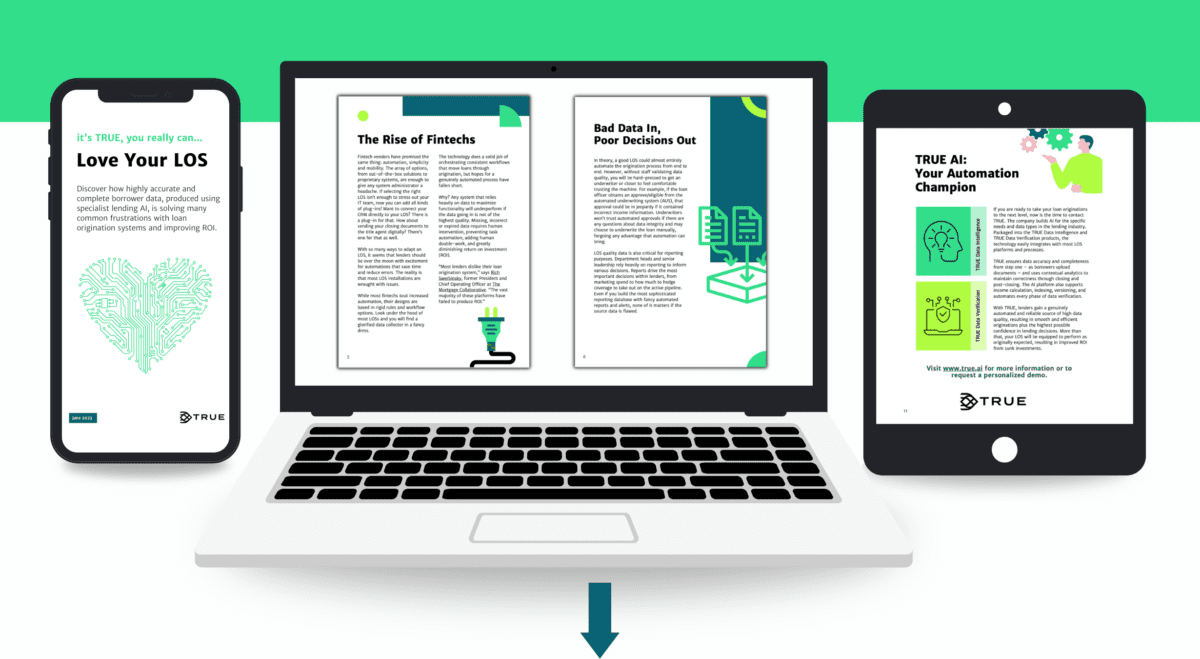
Discover how highly accurate and complete borrower data, produced using smart lending AI, is solving many common frustrations with loan origination systems, while improving ROI.
After talking with so many lenders, it appears the collective effectiveness for most LOS or loan origination systems in the market today is relatively low. And while there are new vendors entering the market every year, the monetary and time constraints that come with onboarding an entirely new LOS make switching systems unrealistic. Because of this, lending organizations must reconsider the relationship they have with their current LOS, as they look for ways to improve the LOS experience and return on investment.
Key Functions and Step-by-Step Workflow of a Loan Origination System (LOS)
A modern LOS manages the entire lifecycle of a loan. Here’s how a typical LOS workflow unfolds:
- Application Intake:
The process begins when a borrower submits a loan application, either online, in-branch, or through a partner channel. The LOS captures all applicant details and initiates the workflow. - Initial Screening and Pre-Qualification:
Basic eligibility checks, such as minimum credit score, income level, and required documentation, are performed automatically. The LOS can flag incomplete applications or route them for manual review. - Document Collection and Verification:
Applicants are prompted to upload or submit required documents. The LOS tracks receipt of each item and can trigger reminders or escalate to staff if documents are missing. - Credit Analysis and Underwriting:
The LOS integrates with credit bureaus and internal risk models to assess creditworthiness. Underwriting rules—customized for each lender—are applied to determine loan eligibility and terms. - Task Assignment and Collaboration:
Based on workflow rules, the LOS automatically assigns tasks to loan officers, underwriters, or compliance staff. Each user receives notifications and can track their assigned items in real time, ensuring accountability and transparency. - Approval and Exception Management:
Applications that meet all criteria are routed for automated or managerial approval. If exceptions or discrepancies arise, such as missing information or flagged risk factors, the LOS routes these cases for manual intervention, with a clear audit trail of actions taken. - Loan Offer and Agreement:
Once approved, the LOS generates personalized loan offers and agreements. Borrowers can review and sign documents electronically, and the LOS tracks completion of all required signatures. - Funding and Disbursement:
Upon final approval and signed agreements, the LOS initiates fund disbursement according to lender policies. The system logs all transactions and updates loan status across integrated platforms. - Post-Funding Handoff:
After disbursement, the LOS transitions the loan to servicing or portfolio management, ensuring a smooth handoff and maintaining a complete digital record for future audits or customer service requests.
This structured, automated workflow not only accelerates processing times but also reduces manual errors, improves transparency, and provides both lenders and borrowers with real-time status updates at every stage.
How Loan Origination Systems Adapt to Different Lending Segments
Modern loan origination systems are not one-size-fits-all, they are increasingly designed with industry-specific workflows and features to support the unique needs of various lenders and lending products. Whether you’re a consumer lender, commercial lender, credit union, or operate a peer-to-peer lending platform, the right LOS can be configured to address your operational realities, regulatory requirements, and customer expectations.
For example, consumer lending often demands rapid credit decisioning and seamless borrower experiences, while commercial lending workflows must accommodate complex underwriting, multi-stage approvals, and detailed collateral tracking. Peer-to-peer and embedded lending models require robust borrower-investor matching, transparency, and automated compliance checks.
Leading LOS platforms offer pre-built templates and modules for specialized loan products, allowing institutions to launch new offerings faster and ensure compliance from day one. Highly configurable workflows and integration options further enable lenders to tailor the system to their unique processes, reducing manual work and speeding time-to-market.
By selecting and configuring an LOS that aligns with your lending segment, you can streamline operations, reduce risk, and deliver a differentiated experience.
The Critical Role of Document and Data Management in LOS
A major source of frustration for lenders centers on how their LOS handles the massive volume of documents and borrower data generated throughout the loan manufacturing process. Many legacy systems rely on fragmented storage or even physical files, making it difficult to retrieve documents quickly, maintain compliance, or ensure data integrity. Modern LOS platforms are evolving to address these pain points by offering secure, centralized electronic document management, automated retention scheduling, and granular access controls, helping lenders safeguard borrower data and streamline audits.
“The industry got forced into this Frankenstein of piecing different systems together, and it’s hard to unwind it even though many are trying,” says Kevin Peranio, Chief Lending Officer at PRMG, a residential mortgage lender. “There’s still no end-to-end solution; no panacea exists.”
This needs to change, and it can change, through the power of AI. Our newest eBook unpacks the reasons why your LOS, and the various plug-ins you may have, are falling short of your expectations. This eBook also provides practical steps lenders can take to mend their relationship with their existing system, including using AI to solve common frustrations, how to avoid “shiny objects” syndrome, and why investing in data quality can enhance your end-to-end performance. Ultimately improving your loan manufacturing experience and outcomes – and your overall LOS experience.